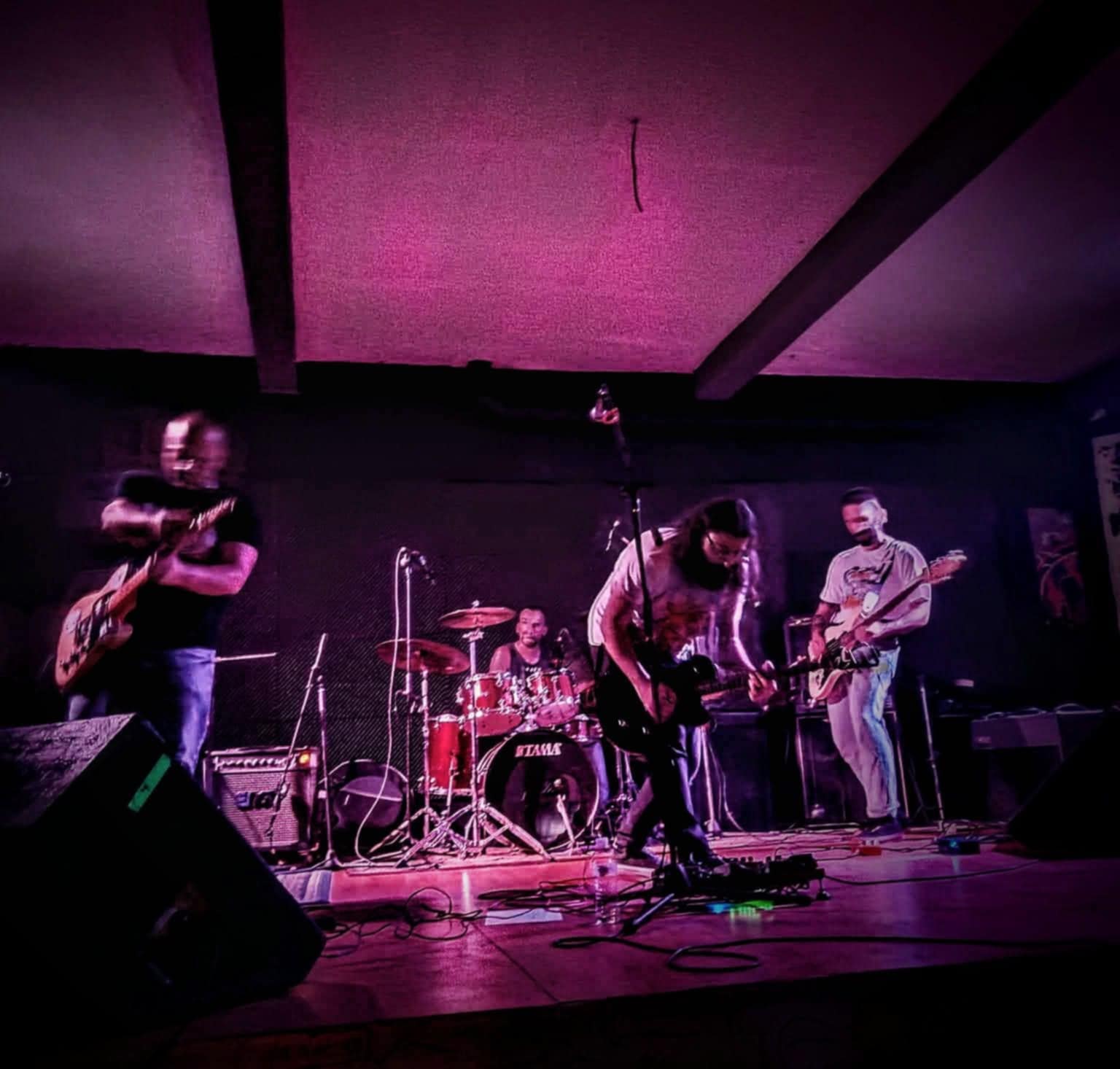
Gristle Pop Confessionals kicks off with Morphine Social Club, a band that thrives in the tension between noise and intention. Built on weighty riffs, hypnotic repetition, and a deep sense of place, their sound feels less like performance and more like pressure — slow, heavy, and emotionally charged. For the first interview on The Echotic Blob, Morphine Social Club open up about fuzz as feeling, silence as threat, and how living inside a city can shape the music that fights back against it.
This is loud music with purpose!
When you first formed in Thessaloniki, what was the sound you were chasing — and how do you hear it now?
When we were first formed in Thessaloniki, we were after a riff based, slow and heavy sound. Think of it as kinda post-stoner, with severe usage of fuzz and layers of reverb and delay. Going back to that sound now is like going back to the musical roots of this band. It’s always there and it’s evolving.
Your music has been described as “monolithic rocknroll.” What does that phrase mean to you in practice?
Playing «monolithic rock ‘n roll» music means to have a solid rhythm section, where drums and bass are the backbone of the song, steady and heavy like a heartbeat.
Do you think noise and fuzz are emotional textures or structural tools in your songs?
The one does not exclude the other. It’s what serves best at a given time. When we’re after a riff, then they’re more like tools in our sonic pallet. But when we’re after the sound that would express our feelings in the best possible way, then they most certainly are emotional textures.
When a riff hits just right, do you feel it before you hear it? How does that moment feel inside you?
When a riff hits just right, you hear that riff playing in your head days before, until it drives you crazy. It’s an absolute necessity to play it with the band so you can be released by its spell. It’s like giving birth.
How do place and repetition shape the way you write — especially living and playing in Thessaloniki?
We’re connected to our hometown in the most strange way. We hate it here and we would love to live somewhere else, but we’re stuck in this place and we struggle with what is given to us. Our latest EP «Suffocate» was inspired by the city we live in. It’s this love-hate relationship that gives us the stimulation to write songs and we’re pretty sure that if we lived in another city, we would not sound the same.
What’s the weirdest influence you’ll admit to — something that sneaks into your sound without explanation?
The influences in a band’s sound are not always obvious. When you hear a song, you digest that sound and the outcome will be completely different. In our case, greek folk music, that subconsciously sneaked into our mind and ears over the years, would influence us more than we’ll ever admit to.
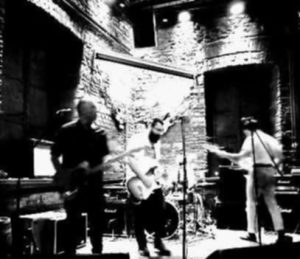
How has your approach to performance changed after years on the local stages, headlining and supporting alike?
We think that experience made us less stressed over the years, when being on stage. The one thing that has never changed is our commitment to our ethical beliefs and our support to the underground music community.
If silence could be a member of the band, what would it sound like next to your noise?
It would be the «calm before the storm» type of silence. Somehow uncomfortable and threatening, giving the feeling that something harsh is about to happen. Like a heart attack.
How do you decide when a track is “done,” especially when texture and space matter more than perfection?
A track is done, when adding anything new, feels like weakening the song. After all, perfection is an illusion and a lame excuse not to finish something.
In your own words, what’s the difference between loud and meaningful?
Our goal, especially when playing live, is to make the audience feel uncomfortable with the dissonance and the loudness of our music. But we don’t want just to fill space with high volumes. We want to alter it. Thus we must make our loudness meaningful.
Do you listen back to your own records, or do you let them live independent of you once they’re out?
Once a record is out, is not ours anymore and it lives independently. We don’t listen back to our own music.
What’s the next unsolved idea you’re chasing — a sound, a mood, or a place you haven’t reached yet?
We would like to play faster and harder, kinda hardcore or even crossover. We think that it suits better with the times we’re living in. Also, a dream of ours is to become a music collective, so that we could invite our friends to play in our songs.
The Echotic Blob – Gristle Pop Confessionals – Morphine Social Club